by Marc Morgan - Member of Mouvement pour une Alternative Non-violente (MAN), Volunteer with The Ideas Partnership
A.Introduction
The present document gives a brief overview of contacts and meetings held during a twelve-day stay in Kosovo in September 2025.
I was not in Kosovo for political or journalistic reasons, but as a volunteer for the NGO "The Ideas Partnership". This non-profit organization, founded in 2009, tries to fill the gap in education, health care, and school and social support suffered by the most deprived communities in Kosovo (Roma, Ashkali, and other marginalized communities). I gave English lessons to children aged 3 to 16, in several villages and towns near Pristina.
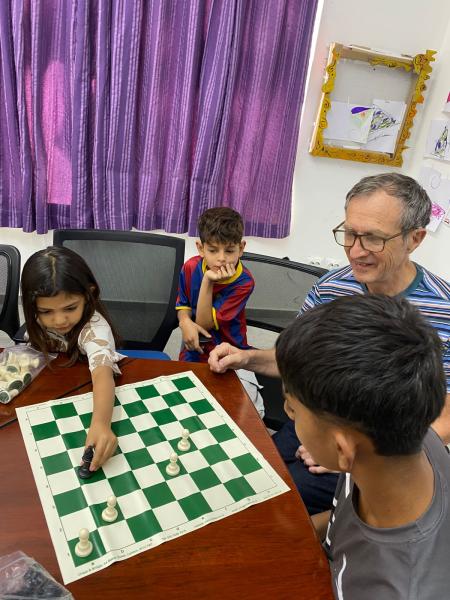
I have a long-standing interest in the history of Kosovo, in the unresolved questions raised by the Kosovo war of 1999 and the conflicts which preceded it, and in the challenges and opportunities now facing the country. I have been involved historically in movements attempting both to support the nonviolent resistance of the Albanians to the Milosevic regime, and to promote reconciliation between Kosovo’s divided communities, in a spirit of understanding for the sufferings, fears and hopes of all parties. I am in particular a member of the French group Mouvement pour une Alternative Non-violente, and was for several years a treasurer of the NGO Equipes de Paix dans les Balkans.
In 2024 I also travelled to Kosovo to work with the Ideas Partnership, and made a short report on my visit which can be read here: https://wri-irg.org/en/story/2025/reflections-visit-kosovo.
In September 2025 I was very grateful for the opportunity to meet with several organizations and several experts on Kosovo, all Kosovar Albanians themselves, and all committed both to dispassionate analysis and the promotion of understanding.
B. NGO Action for Nonviolence and Peacebuilding
I describe first my meeting with representatives of NGO Action for Nonviolence and PeaceBuilding (ANP – see http://anp-ks.org/), based in Gjilan in eastern Kosovo. Also present at the meeting were I myself as a representative of the Mouvement pour une Alternative Non-Violente, Tahir Dalipi, translator (from and to the French) of “L’école du people”, and a colleague of his, Sami Selishta. The meeting was held on Thursday 18th September 2025 in Gjilan.
General Considerations on Kosovo’s recent past
Before discussing ANP in detail, we considered the periods before its foundation, in particular the years of passive or nonviolent resistance in the 1990s, the drift to war, and the war itself and its aftermath.
The two ANP representatives have emphasized that the major turning point was marked by repression, the rise of Serbian nationalism and structural violence by Milosevic’s regime. The annulment of the 1974 constitutional framework and the subsequent administrative incorporation of Kosovo into the Serbian republic in 1989, have determined the political developments in the 1990’s, and the Albanians’ reaction involving self-organization and non-violent resistance. Amongst many nonviolent actions organized in Kosovo, and important landmarks in the resistance struggle of the Albanians, they evoked the hunger strike of the Trepça miners, and the creation of the Council for Defence of Human Rights and Freedoms (CDHRF ), both in 1989. Both events were landmarks in the growth of Albanian unity and solidarity; the CDHRF continued to do excellent work documenting and reporting human rights abuses throughout the conflict years right up to the war.
The two ANP representatives expressed the view that nonviolence did not fail, since it has contributed to the avoidance of war for several years and the search for peaceful solution. Through nonviolent protests, awareness raising for structural violence and documentation of discrimination and human rights violations, Kosovo leaders have managed to internationalize and highlight the Milosevic’s regime's oppression and repression, such as it was being perpetrated in Kosovo. Nonviolence firstly had important practical benefits, in preserving Kosovo from the death and destruction experienced in other parts of ex-Yugoslavia; but it also had an important nation-building effect. It enabled the Albanians to become aware of themselves as a unified group facing oppression and resisting it in an organized but nonviolent way.
Along with nonviolence also came pluralism; this created a new, empowering dynamic. It is important to emphasize the active character of the nonviolence of the Albanians; it involved taking initiatives, setting up parallel structures, having a parliament and an alternative government. The Albanian majority had to react to the Serbian regime’s repression in order to survive, and nonviolence was the key to their reaction.
Although the shuttle diplomacy was very active during the 1990’s, the oppression of Albanians in Kosovo was increasing, the tensions were continuously intensified, and it was obvious that the status quo situation was leading to armed conflict and that war was unavoidable. Although the Albanian leaders of Kosovo tried by peaceful means to reach a sustainable and inclusive agreement for all, where human rights and freedoms would be respected, unfortunately this was not accepted by the Milosevic regime.
The frustration of the Albanian population related to their human rights humiliations was growing every day, involving the closure of Albanian schools and universities, media censorship, dismissals from work, arrests and political assassinations, etc. The uncertain and unpredictable situation led to oppression and fear, especially after the war in Croatia and Bosnia and Herzegovina began to affect Kosovo Albanians. In response to systematic violence, the need for freedom has fostered other approaches and solutions in order to combat the Milosevic regime. In response to that regime’s structural violence, the Kosovo Liberation Army (KLA) was formed in 1997 to protect the civilian population and fight the Milosevic regime. However, the war ended only after NATO military intervention in 1999.
Action for Nonviolence and Peacebuilding (ANP)
While ANP operates with a modest staff, its impact in peacebuilding and reconciliation is substantial and very important. ANP was founded in 2002 as a grassroots civil society organization with the vision of contributing to sustainable peace in Kosovo and the region. ANP is based in Gjilan and also an office in Pristina. ANP’s main work is across Kosovo, the Gjilan region and also involves the implementation of cross-border activities.
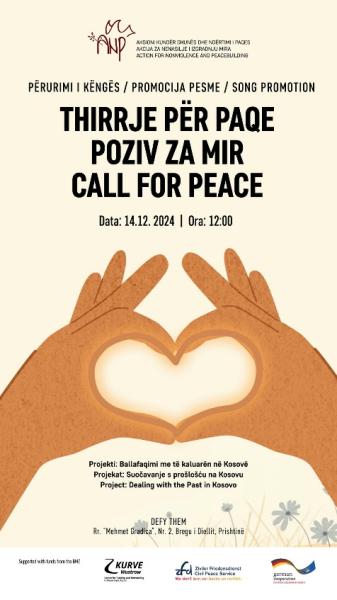
ANP is a fully autonomous NGO, receiving its funding from different donors: international organizations; embassies and non-governmental sources. Since, 2014 ANP is successfully implementing the partnership project “Dealing with the past in Kosovo” with a German nongovernmental organization, Kurve Wustrow. The project is supported with funds from the German Federal Ministry for Economic Cooperation and Development (BMZ). The Mennonite Central Committee has been an important and long-term partner of ANP in the period from 2007-2019, and has supported ANP’s peace activities and organizational sustainability. The Centre for Nonviolent Action, based in Belgrade and Sarajevo, is also an important partner.
The general aim of ANP has always been to promote a culture of nonviolence, to initiate interethnic dialogue, peacebuilding and reconciliation between the divided ethnic communities of Kosovo.
It has worked and continues to work with diverse ethnic communities, and a wide range of Kosovar citizens: teachers, producers, artists, representatives of local and central institutions, journalists, students, CSO’s activists, young people and others. It has sought to create a safe space in which members of the different communities can speak openly about their experiences, about traumas from the past, and about their hopes and fears for the future. It tries to assist the different communities in finding a common language: this is true metaphorically, and also very literally, since ANP has participated in and encouraged initiatives for young Serbs to learn the Albanian language and Albanians the Serb language, something which is currently very rare. To overcome the language barrier, for all ANP activities, translation is provided from Albanian to Serbian and vice versa.
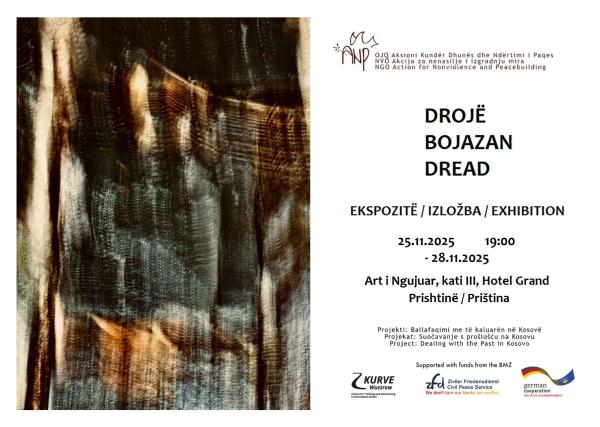
In the past, ANP focused on peace education and the struggle against discrimination. Since 2014, it has focused more specifically on dealing with the past and enabling representatives of the diverse communities to participate in the “Dealing with the past in Kosovo” program The project aims to provide safe spaces through interactive trainings and psycho-social counselling in which the project participants jointly work through painful memories of the past and are supported in documenting their memories creatively using different forms of artistic expression as a tool. Through exhibitions, documentary and short feature films as well as theatre performances ANP makes this process of documenting the past comprehensible for a wider audience and works to contribute to a culture of remembrance that fosters dialogue across ethnocentric and generational divides and strengthens reconciliation and peace.
ANP organizes long-term training courses consisting of a series of workshops, some lasting as long as a week, in which participants express their emotions, their memories and their traumas through art. 11 such courses have been run since 2014, involving groups of 16 people or more, so that in total more than 200 people have participated in the courses. The social mix is very wide, and it is striking that many applications to follow these courses have come from the Kosovo police, who have to deal with some of the aftermath of violence. Above all of course, the ethnic mix of the courses is diverse: they always include all ethnic communities living in Kosovo Albanians, Serbs, Turks, Roma, Ashkali, Egyptians1 and Bosnijacs, etc.
ANP’s approach is that first a safe space must be created, enabling the expression of emotions free from judgment, and free initially from political pressure to “find solutions” or “address objective problems”. Only when emotions have been released is it possible to turn to practical steps for reconciliation, and only after such release is it possible to address questions of acknowledgment of guilt, truth, justice, forgiveness, and reconciliation. ANP have found that this approach through interactive workshops and artistic expression, ultimately leads to a better understanding between the divided communities and creates trustful relations.
Questions around Guilt and reconciliation
The discussion of issues of guilt and recognition has led us back to a wider discussion of the prospects for peaceful co-existence between Serbs and Albanians. ANP representatives believe there are some positive aspects of the current situation in this regard. On paper, Kosovo’s constitution, written by international legal experts, is the most advanced and the most respectful of human rights in the Balkans; they would like to see it implemented in practice as well. Through accepting and respecting differences ANP's representatives would like to see that human rights are fully respected and applied in everyday life. There is a strong wish for a truly democratic society – certainly in Kosovo, but also in Serbia as demonstrated by recent protests against the government there.
Against this must be set the fact that politicians, and politicians in Serbia in particular, have instrumentalized the Kosovo question and encouraged a nationalistic focus on Kosovo in their own interests. They use the leverage they have on Serbs in Kosovo to exercise a form of blackmail: support us, including in our claims on Kosovo, or we will withdraw our assistance. As a result, the situation is heavily politicized and polarized, and Kosovar Serbs are inhibited from taking the practical steps towards integration and reconciliation which would best serve their own interests.
ANP representatives acknowledge that nationalism still exists on the Albanian side also; this is a result of the consequences of the long-term oppression and repression before the war, suffering during the war and post-war political developments. The weight of history is still very heavy throughout the region, and symbols such as flags are omnipresent. In this connection, I raise a question regarding the fact that the Albanian flag is much frequently seen in Kosovo than the Kosovar one. In post war societies, the national identity is very important, and symbols are very prominent throughout the Balkans region. In Kosovo, the Kosovo flag is considered the state flag, while the Albanian flag is considered the national flag and is used by all Albanians widely wherever they live. This is a legacy of history, since it was a symbol of Albanians resistance during the centuries.. It does not indicate any concrete desire for re-unification with Albania.
Next steps
At the end of the meeting I have thanked ANP representatives for the rich and detailed discussion. I have translated this account of my meeting for the MAN, and will warmly encourage the MAN to foster links with ANP, a process I myself would like to take part in.
Illustrations: examples of events promoted by ANP:
1 The Roma, the Ashkalis et the Egyptians are three Gypsy minorities from the Balkans. Several theories have been put forward concerning the historical lineage of the "Egyptians" and their link with Egypt, but they are not citizens of that country.
C.Visit to Mitrovica
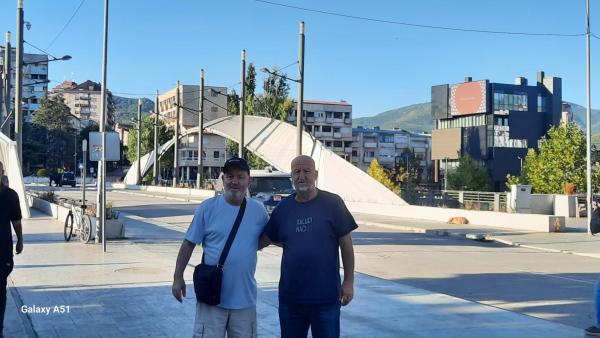
On Friday 19th September, I was able to spend several hours in Mitrovica, the largest town in Northern Kosovo, and a focal point in the years since the Kosovo war for tensions and occasional violent clashes, but also for measures of reconciliation between Serbs and Albanians.
It was in Mitrovica that the organization to which I belonged, Equipes de Paix dans les Balkans, sent volunteers in the years 2000 to 2006. Their mission was to create safe spaces in which members of the different and divided communities seeking to establish dialogue could do so. I visited our volunteers in Mitrovica in 2002, and was able to appreciate the difficulty of their task, raw as the wounds left by the Kosovo war still were at that time.
I was welcomed in Mitrovica by Skender Sadiku, deputy chairperson of the City Council, and Lulzim Hakaj, Co-founder and Coordinator of the NGO Reconciliation and Empowering Communities. We had a short conversation in which Skender Sadiku exposed his reasons for optimism despite the material and political difficulties besetting northern Kosovo. He believes both in the virtues and in the possibility of dialogue and of democracy. In this connection Skender Sadiku is actively following the current protest movements in Serbia, involving the youth of that country, and calling for more transparency and less corruption in public life.
While Kosovo needs to be independent from Serbia, the destinies of the two countries are bound up with one another, because developments in Serbia have a direct impact on political life in Kosovo, and on the possibility of harmonious co-existence between Kosovar Serbs and Albanians. S. Sadiku believes in a shared future for Serbs and Albanians in Kosovo, but such a shared future is ultimately dependent on acceptance of Kosovo by Serbs in both Serbia and Kosovo. This acceptance cannot be imposed from outside. It needs to proceed from the understanding and evolution of Serbs themselves.
Lulzim Hakaj also hopes for a future in which the different communities will take responsibility for their future and for their need for tolerant co-existence, but expressed greater scepticism concerning the timeframe along which this might happen. As things stand, he believes that neither the Albanian nor the Serb Kosovar communities are ready for a peaceful co-existence not guaranteed by external powers. His belief is that in the current climate, the withdrawal of foreign bodies (the United Nations, NATO, the European Union) from Kosovo would lead to Serbian attempts to re-assert Serb authority over Kosovo, and most likely to violent conflict.
After an hour or so’s discussion, Skender and Lulzim kindly drove me around Mitrovica, and I was able to see the extent to which the city has been rebuilt and modernised in the years since my 2002 visit. The river and streets have been cleaned up, and bright lights and gleaming shop windows brighten up the streets where previously buildings were grey and marked with the traces of war. The Serb-dominated northern part of the city still sports signs in Serbian as you would expect, and statues of historical Serb heroes. But there is more interaction between the two communities, and new bridges built over the river Ibar which divides the communities enable physical contact slowly but surely to be re-established.
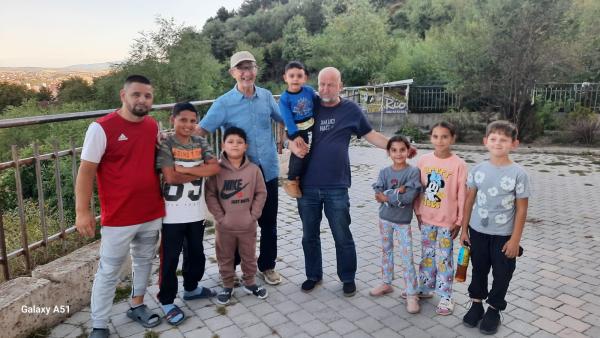
This more optimistic picture was confirmed by my visit to outlying suburbs of Mitrovica. Here I was introduced first to Roma families who inevitably struggle materially, and for whom day-to-day survival is the top priority rather than political issues of integration and reconciliation. I was also introduced to Albanian and Serbian inhabitants of these remoter parts of the town, who all emphasised that relations between neighbours were excellent. This message was conveyed to me particularly strongly by a highly articulate Albanian youth, born since the Kosovar war, who told me that for him the war belonged to history, and that it was never mentioned during his frequent and very friendly interactions with his Serbian neighbours. Skender Sadiku emphasised that this was not a freak, minority opinion, but that in large areas of northern Kosovo, away from the flashpoints and outspoken protests which catch the headlines, a slow process of reconciliation was underway, based on civilised neighbourly relations and acceptance of the others’ humanity.
D.Meeting with Professor Nexhmedin Spahiu
I thanked Skender Sadiku and Lulzim Hakaj for their warm welcome, and also for introducing me to Professor Nexhmedin Spahiu, a distinguished professor of mathematics at several universities including the University of Pristina, but also a political scientist, and a recognized authority on recent Balkan history and recent and current Balkan geo-politics. Professor Spahiu has outlined two of the main areas of his research:
The history of relations between Albanians in Kosovo and in Albania itself1
Different proposals made historically – of course primarily by Serbs – for the partitioning of Kosovo between Serbs and Albanians.
In connection with the first theme, Professor Spahiu has highlighted the fact that there is only one brief period in history in which Albanians in Kosovo and Albania were united in a single, independent country, namely the war period from 1941 to 1945. The triumph of Tito in Yugoslavia and of Hoxha in Albania ensured that this brief experiment in unity was doomed. The experience of unity and independence exposed tensions between the different Albanian communities; it was also obviously tainted, being an independence achieved with the assent and under the control of external (and ultimately defeated) powers – Italy and then Nazi Germany. The experiment contained positive features, however, and was for some Albanians from all parts of the unified country an empowering experience. Despite this currently and except in the very long-term, re-unification is not a possibility, nor is it envisaged.
Professor Spahiu’s book devoted to the theme of Serbian plans for partitioning Kosovo2 starts with a fascinating chapter on history as it is taught respectively to Serbian and to (Albanian) Kosovar schoolchildren. In a series of short paragraphs, themselves set out as bullet-points corresponding to a specific “fact” or area of “facts” taught in the respective countries, the book outlines the completely different, one-sided histories which inform the prejudices of each community. The account of these divergent historical approaches is sufficient to understand the difficulties of reconciliation.
Regarding the central theme of the book (which Professor Spahiu also developed orally when I met him), there were many different plans for partitioning Kosovo put forward by different Serb actors (politicians and historians) in the period 1997-1998. These were clearly motivated by the realization that the international community would not accept exclusive Serb control of the whole of Kosovo forever, whereas partition might be “sold” to the international community as a necessary but acceptable compromise. The various Serbian plans for partition differ both in their content and their premises (e.g. historical claims versus current population); but all would have had the effect of leaving the Serbs in control of a proportion of Kosovo far greater than Serbian population as a proportion of Kosovo’s total population; and in control also of the richest parts of Kosovo, in particular the mineral-rich areas of the North.
E.Meeting with human rights activist Shkëlzen Gashi
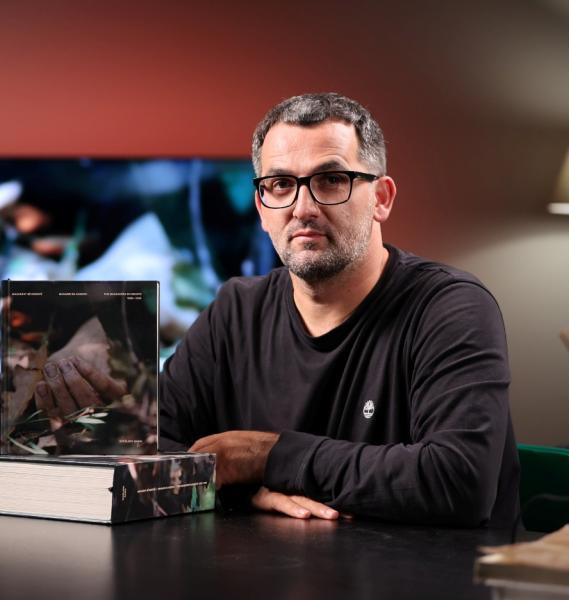
Shkëlzen Gashi is an independent researcher and activist, who has written many articles and books on the recent history of Kosovo, including the unauthorised biography of Adem Demaçi, a key figure in Kosovo’s late 20th century history who spent 28 years in prison.
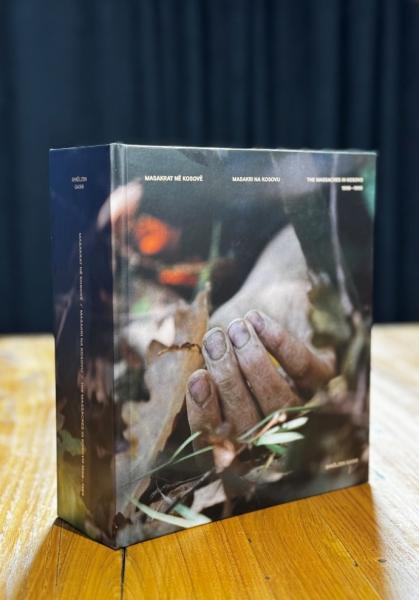
Shkëlzen Gashi has produced a remarkable book detailing the massacres committed in Kosovo in the period 1998-1999. The book documents 83 massacres committed in the period February 1998 to July 1999. Of those, 3 involved the killing of Serbian civilians.
The text, written in Albanian, Serbian and English, is interspersed with sober, harrowing photos of the graves of the victims, the locations of the massacres, and the grieving of surviving relatives. The writing, rigorously based on sources such as the records of the International Criminal Tribunal for the former Yugoslavia, is mostly sober and factual, but the witness accounts which are quoted, though restrained in tone, are deeply moving in their stark statement of recollections of events.
I will not attempt a detailed presentation of the book here, though I warmly recommend it to anyone with an interest either in Kosovo in particular, or, in general, in the historical recording of the effects of war and of its excesses. Certain key characteristics of the record which the book details, and of the reception given to the book, are worth highlighting:
A minority of massacres (15) were committed in the period February 1998-March 1999, partly as a reprisal for attacks by the Kosovo Liberation Army, certainly in response to the emergence of the KLA.
The massacres increased greatly both in number and in intensity immediately after the beginning of the Kosovo war. NATO’s hostilities against Serbia, and its bombing of both Serbia proper and parts of Kosovo, seem to have sent Serbian forces into a frenzy of killing and hatred.
All restraint seems to have been lost amongst Serbian forces committing the massacres on the ground, but the knowledge and at least tacit approval of them came from the very heart of Serbian power.
The mere fact of recording 3 massacres of Serbian civilians, at least two at the hands of Albanian groups wreaking revenge for exactions by Serbs, has caused Shkëlzen Gashi to be the butt of criticism and ostracism from many chauvinistic Kosovo Albanians, including journalists, academics, and other commentators.
Despite this hostility, Shkëlzen Gashi has continued to promote his book and the even-handed, unbiased principles on which it is based, attracting praise both from distinguished experts on Kosovo such as Professor Noel Malcolm, and from organizations and individuals seeking truth and reconciliation in Kosovo.
I have discussed the book with Shkëlzen, as well as his latest work on the theme of “the Other Serbia”. This consists of a series of volumes focusing on individuals and forces in Serbia who resisted the Milosevic regime and sought to expose that regime’s lies and manipulations. Shkëlzen has emphasised the difficulties of working as an independent specialist dedicated to letting the historical record speak for itself, and of not being swayed by the pressures, prejudices and groupthink prevalent in all societies, but particularly perhaps in the Balkans. Even at the highest level, Shkëlzen fears that commitment to the truth is far from absolute in academic and journalistic circles in Kosovo. Shkëlzen has paid tribute to Ibrahim Rogova, about whom he is writing a book, while recognizing that his long-time Adem Demaçi was inevitably led to oppose Rugova and to argue that nonviolence would never be sufficient to free Kosovo from the Serbian yoke.
“The Massacres in Kosovo 1998-1999” was published in Pristina in 2024. You can order a copy of the book here: https://dukagjinibooks.com/en/books/1092290237
1 See “Kosovo and Albania in the Future”, by Nexhmedin Spahi, Pristina, 2021
2 See “Serbian Tendencies for Partitioning of Kosovo”, Central European University, Budapest, June 1999.

F. The Museum of Independence
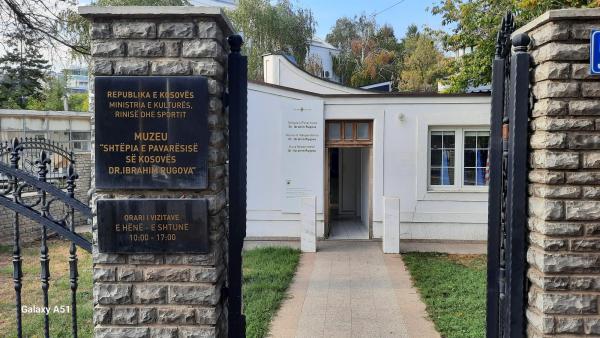
I am very grateful to Shkëlzen Gashi for pointing out to me, the existence of the little-known Museum of Independence1. This is located in the small, discrete building which served as Rugova and the LDK alternative government’s Pristina headquarters, in the very centre of town.
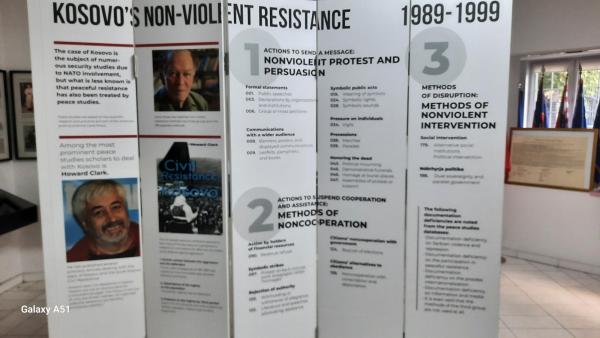
The museum contains a detailed record of Kosovar Albanians’ long struggle firstly to assert their autonomy as a distinct, homogeneous community within what was Yugoslavia, and secondly to lay the ground for their long-term aim of independence.
The museum captures in a wealth of photos and accompanying texts, the key moments of the struggle against Milosevic: the Trepca miners’ strike of 1989; the reconciliation work of Anton Ceta under which hundreds of thousands of Albanian families renounced the tradition of blood feuds; the emergence of the parallel education and health systems; the institution of an alternative government and the attempts to win over the international community.
The museum contains a warm and detailed tribute to Howard Clark and his work on Civil Resistance in Kosovo. It recalls the conditions Clark set out for a Civil Resistance movement to be successful, and highlights with great honesty the areas in which the Kosovo nonviolent movement met those conditions, and the areas in which it failed to do so.
The museum does not feature in travel guides and travel blogs I have consulted, but deserves to be much better known.
1 The Roma, the Ashkalis et the Egyptians are three Gypsy minorities from the Balkans. Several theories have been put forward concerning the historical lineage of the "Egyptians" and their link with Egypt, but they are not citizens of that country.
2 See “Kosovo and Albania in the Future”, by Nexhmedin Spahi, Pristina, 2021
3 See “Serbian Tendencies for Partitioning of Kosovo”, Central European University, Budapest, June 1999.
4 See https://hiddengemsofPristina.com/museum-independence-house-dr-ibrahim-r…